

St. Paul Cathedral
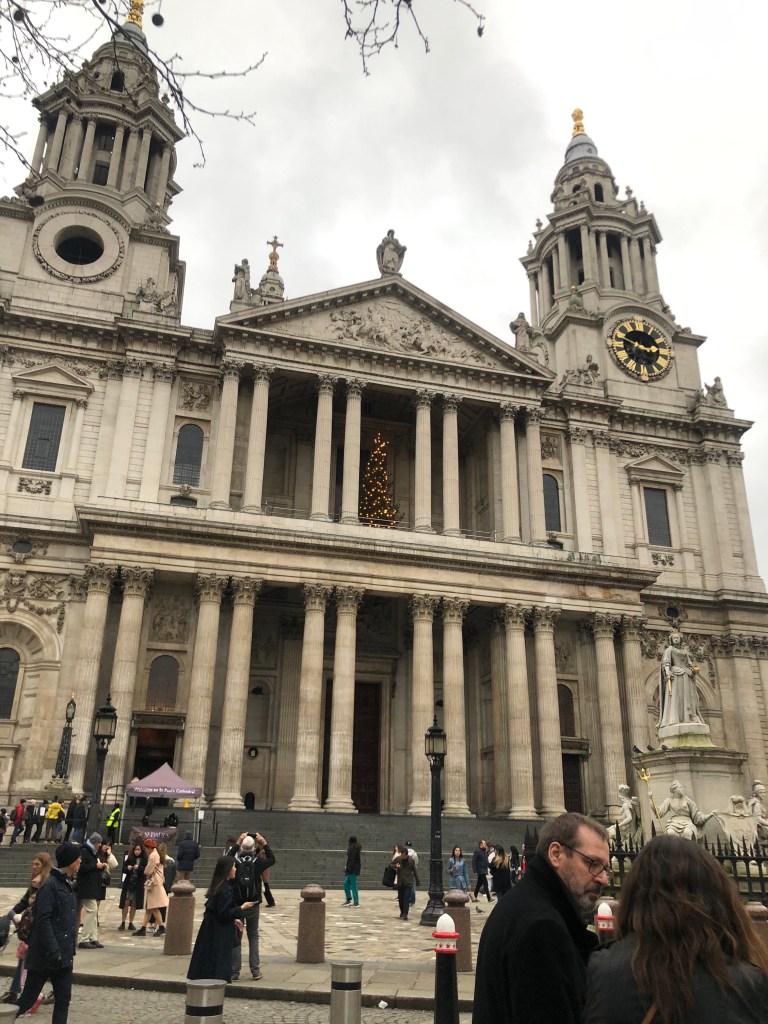
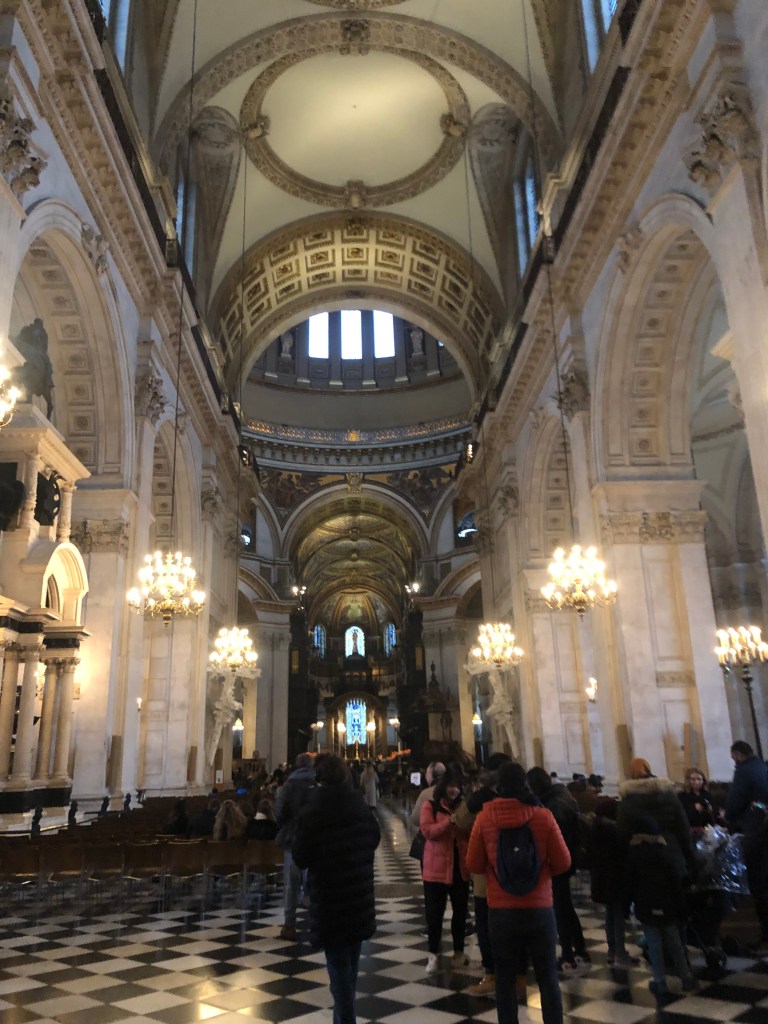
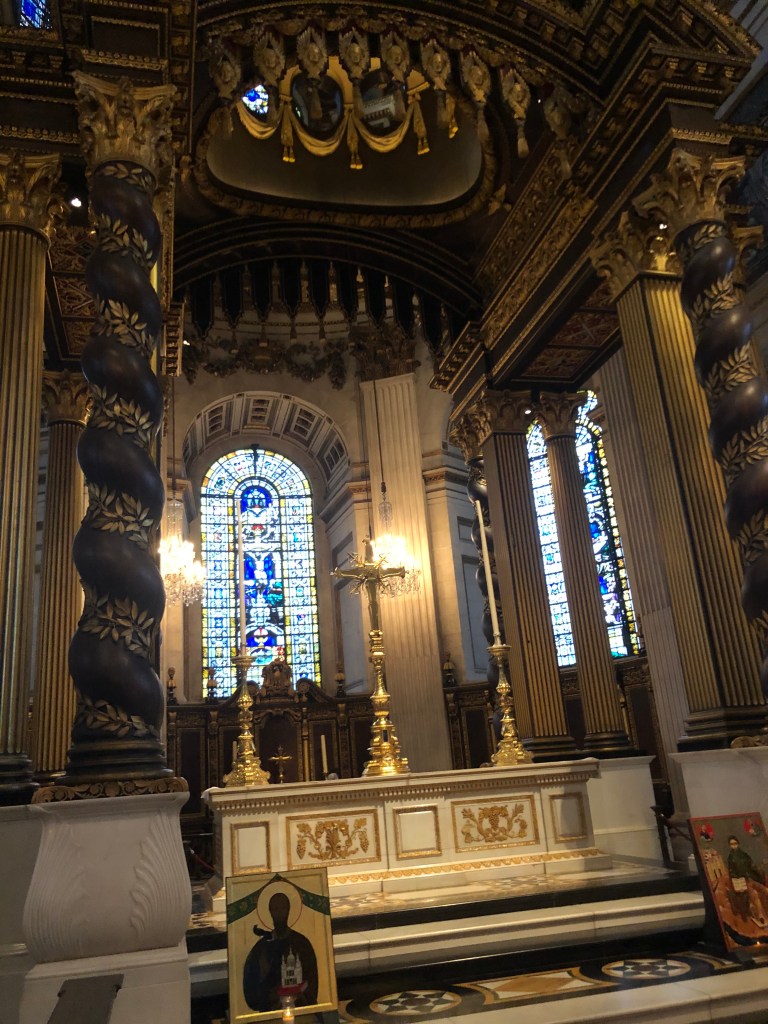
While in London on January 2, 2020 we had the opportunity to visit the historical St. Paul Cathedral. As soon as I walked up to the church I was overwhelmed with the beauty of the structure and design of the building. Growing up as a catholic I always enjoyed the designs of churches and the beauty of the stain glass windows and architecture. The original Cathedral was destroyed in the devastating Great Fire of London. Sir Christopher Ren was the architect chosen to design and construct a new Cathedral. The Cathedral was built between 1675 and 1710 with the first service beginning in 1697. While inside there are aspects of the church that reflect the great fire and what had happened to the old church. I really enjoyed that they left some parts of the church uncleaned that were affected by the fire to show character and the history of the church.
As soon as I stepped inside the Cathedral I was blown away by the mosaics and architecture. William Blake Richmond was chosen by the cathedral decoration committee to design mosaics for the Quire. These mosaics were my favorite part of the cathedral because they told a story in a beautiful creative way. The ceilings, walls, and aisles were encrusted with millions of tesserae made of colored glass and gold leaf. The artists used a lot of gold so that the light from outside reflects off the gold to make it lighter inside. The ceilings of the Quire were breathtaking and showed the story of the creation. They included The Creation of the Beats, The Creation of the Fishes, and The Creation of the Birds. These were made of colored glass and gold leaf. Richmond also created stained glass windows for the church but were lost in World War II. Overall this Cathedral was my favorite building in London and I am very grateful I had this opportunity to go inside and see all the beauty it has to offer.
Gerhard Ritchter: Cage (1)-(6)
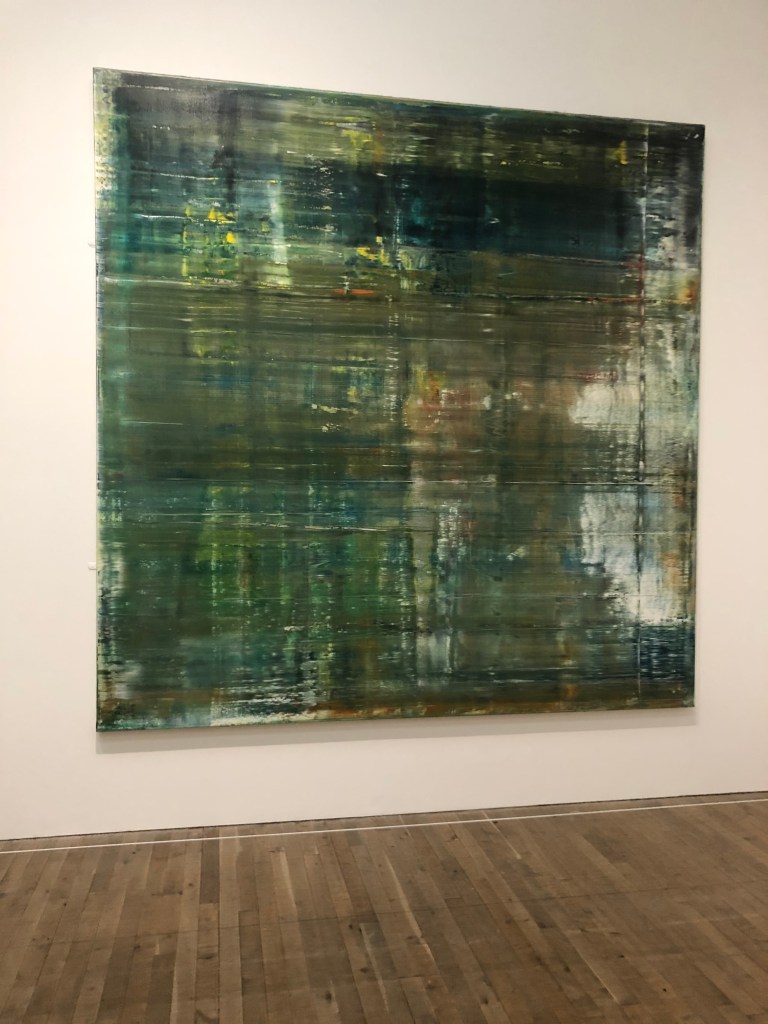
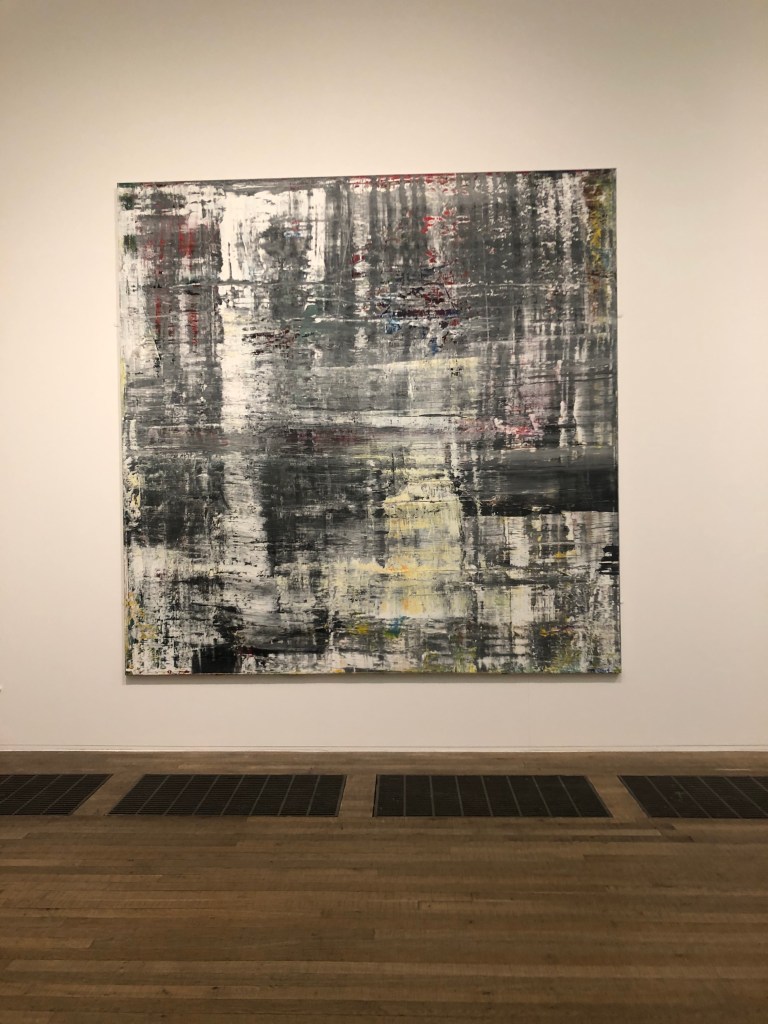
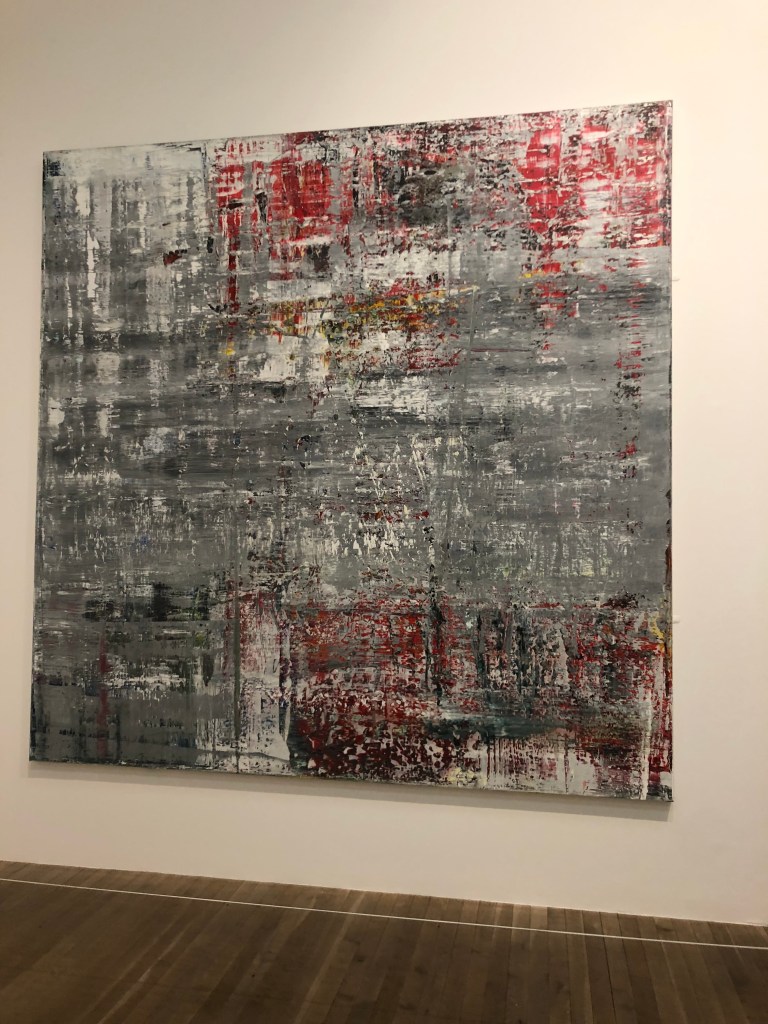
The Tate Modern was an knowledgable experience that we had the opportunity of going to while in London. While inside I walked into the Gerhard Richter room and was immediately drawn into the artwork. Cage 1-6 is a group of six large, square abstract paintings that were made in his studio in Cologne in 2006. All six paintings are similar as a collection but are very different as individuals. These paintings really drew me in with their abstractness and the texture. He used thick layers of paint to create a rough texture. I enjoy paintings that use texture because it gives the piece more character and individuality. The technique he used to create these works of art was very interesting to me. According to the Tate Modern website, “They are composed of a progression of horizontal and vertical bands and a series of multi-directional scratches and indentations that are scraped into the painted surface. In specific areas of the paintings, the upper layers of paint have been removed and several sublayers of color exposed.”
Richter used oil paint to create these as well as oil of carnation as a retarder to prevent the paint from drying too quickly. The colors used on each piece in the collection are different and complement each other well. The painting that caught my attention the most was Cage (6), which is the most varied in its range of exposed underlying colors, but is mainly green, white, yellow, black and blue. It reminded me of the beach and ocean with a rustic feel. The texture is very scratchy in this one and has many marks and colors.
References
Wilkinson, Judith. “’Cage (1) – (6)’, Gerhard Richter, 2006.” Tate, May 2016, https://www.tate.org.uk/art/artworks/richter-cage-1-6-l02818
 European Art & Architecture